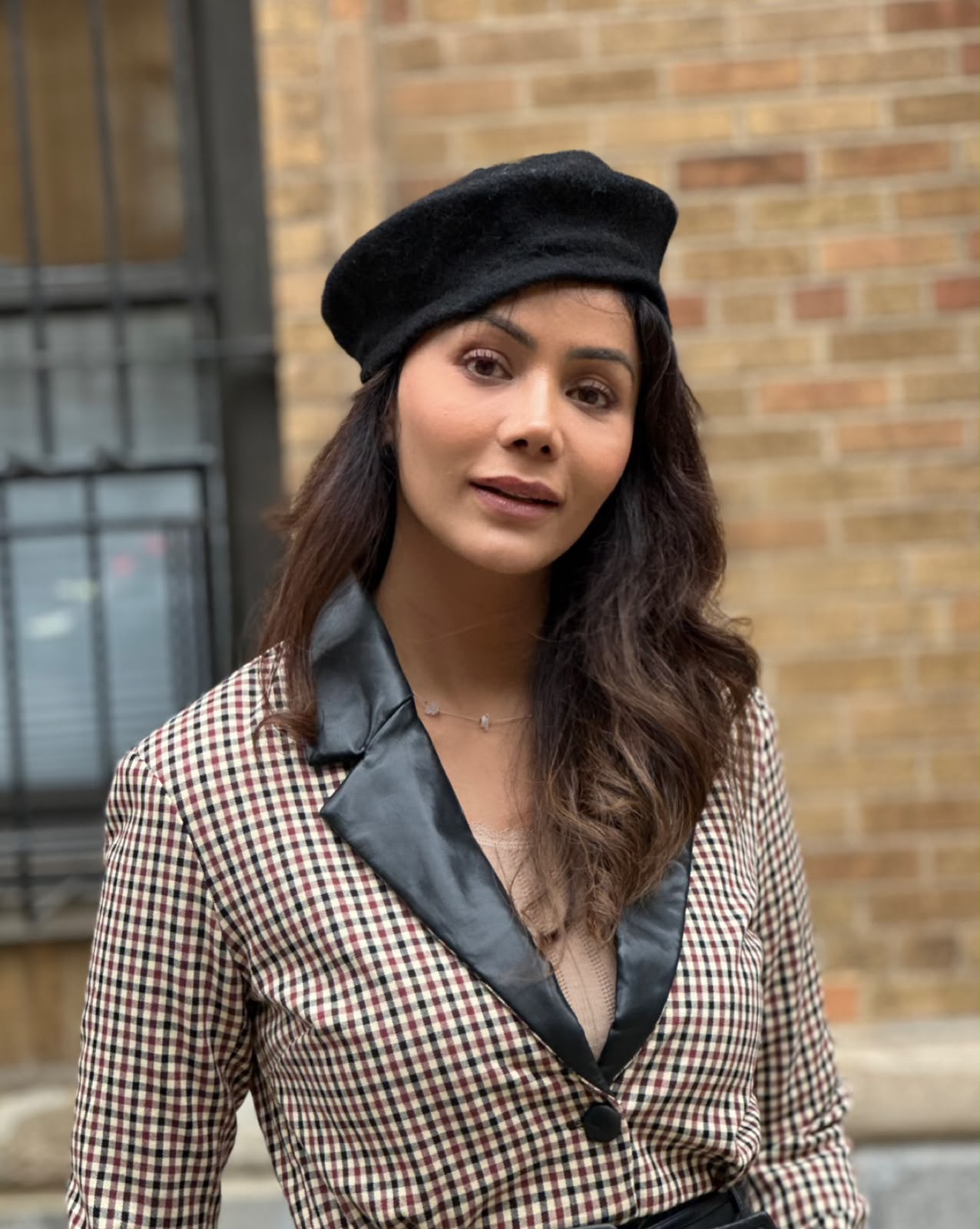
Mumbai: In an age of endless scrolling, shrinking attention spans, and constant distraction, actor, writer, and theatre-maker Nanncy Gill is interested in something remarkably simple: helping people pause.
Not to escape reality, but to return to it.
For Gill, storytelling has never been about creating perfect characters or larger-than-life worlds. It is about uncovering the parts of ourselves that often remain hidden beneath routine, expectation, and habit.
“We spend so much of our lives doing what we’re supposed to do,” she says. “Somewhere along the way, we stop asking ourselves what actually makes us feel alive.”
That question has become the foundation of her work across theatre, film, and writing.
While many stories are built around conflict or spectacle, Gill finds herself drawn to quieter moments—the conversations people never have, the emotions they suppress, and the dreams they quietly abandon in order to fit into lives that no longer feel like their own.
She believes much of that silence begins with conditioning.
“From a young age we’re given a pattern for how life should look. School, college, career, marriage, family. There’s nothing wrong with those choices, but the problem begins when we believe there’s only one way to live. We become so busy fitting into the picture that we forget to ask whether the picture belongs to us.”
Rather than judging those choices, Gill wants audiences to question them.
She often uses humour as the doorway into those conversations. While grief and struggle are easy to recognise, genuine laughter has become increasingly rare.
“People remember the last time they cried,” she reflects. “But if you ask them when they laughed with their whole heart, many can’t remember. Laughter creates openness. It reminds us we’re present. Once people begin laughing together, they’re often willing to look at truths they might otherwise avoid.”
That belief shaped Mandi House, her original theatre production, which explores questions of identity, technology, relationships, and the pace of contemporary life.
More than anything, Gill hopes audiences leave the theatre asking themselves whether they are living intentionally or simply moving from one expectation to the next.
“We’ve embraced technology, and that’s wonderful. But there are some things that should remain sacred—our relationships, our conversations, our roots, our ability to truly listen to one another. Technology should help us connect, not replace the human experience.”
That search for authenticity also defines her approach as an actor.
Rather than looking for similarities between herself and the characters she portrays, Gill begins with their differences. For her, understanding unfamiliar emotional worlds is what allows a performance to feel honest rather than performative.
She resists the idea of modelling herself after any single artist, believing that every creative voice is shaped by lived experience.
“I admire many writers, filmmakers, and performers, but I don’t want to imitate anyone. Every artist offers something worth learning from. The challenge is to absorb those influences while remaining truthful to your own experiences and your own voice.”
As her work expands across theatre, film, and digital storytelling, Gill continues to focus less on recognition and more on creating stories that invite reflection.
“There are projects that are deeply personal to me,” she says. “Some stories need time because you have to become the person capable of telling them truthfully. I don’t want to rush them.”
It is a philosophy rooted in patience rather than urgency—one that values honesty over performance and meaning over momentum.
For Nanncy Gill, the purpose of art is not simply to entertain.
It is to create a moment of stillness in a world that rarely stops moving.
And perhaps, in that brief pause, help someone remember the version of themselves they thought they had lost